Loss-In-Weight Feeding Machines vs Volumetric Feeders in 2025
You have an important choice to make. You can pick a Loss-In-Weight feeding machine or a Volumetric Feeder. Loss-In-Weight Feeder technology is exact. It can measure doses within ±1%. It continuously checks weight loss for precise control. Volumetric Feeders use screw speed and need manual calibration. This makes them less accurate, especially with different materials. Picking the right feeder changes how well things work and the quality of the products. Companies that buy precise feeders can reach new markets. They can also make more products. The table below shows how:
Benefit | Description |
|---|---|
Add new products or product lines | Let's companies grow and offer more products. They use their past success to help. |
Target new niche markets | Helps companies reach new markets they could not before. This is good for companies with fewer resources. |
Key Takeaways
Pick a Loss-In-Weight feeder for better accuracy. It keeps the material moving at a steady rate. The feeder changes itself when needed. This helps give the right amount every time.
Volumetric feeders work well for easy jobs. They are good for materials that flow easily. These feeders cost less money. You need to check them regularly to ensure they are correct.
Buying a Loss-In-Weight feeder costs more at first. But you spend less on fixing and cleaning it later.
Think about what kind of material you have. Also, look at how the material moves. Loss-In-Weight feeders can work with many types. They even handle sticky materials.
Learn about new technology like AI and IoT. These can help feeders work better. They make your production faster and smarter.
Loss-In-Weight Feeding Machine
Definition and Principle
A Loss-In-Weight feeding machine helps you control material flow very well. It checks the weight of the material in a hopper as it leaves. The system watches how much weight is lost over time. It changes the feed rate to keep the flow steady. You can look at the table below to see how this works:
Evidence Description | Key Points |
|---|---|
Working Principle of Feeders | The feeder always checks its mass and changes how fast it lets out material to keep the flow steady. |
Measurement Method | A weighing system checks how much weight is lost as the feeder gives out material. |
Structure of Feeders | The feeder has a hopper that sits on a weighing platform. |
Measurement and Control | It measures how much material is given out and sends this data to a controller that makes changes. |
Purpose of the System | It fixes any difference between the real and wanted flow rates. |
Mechanism and Precision
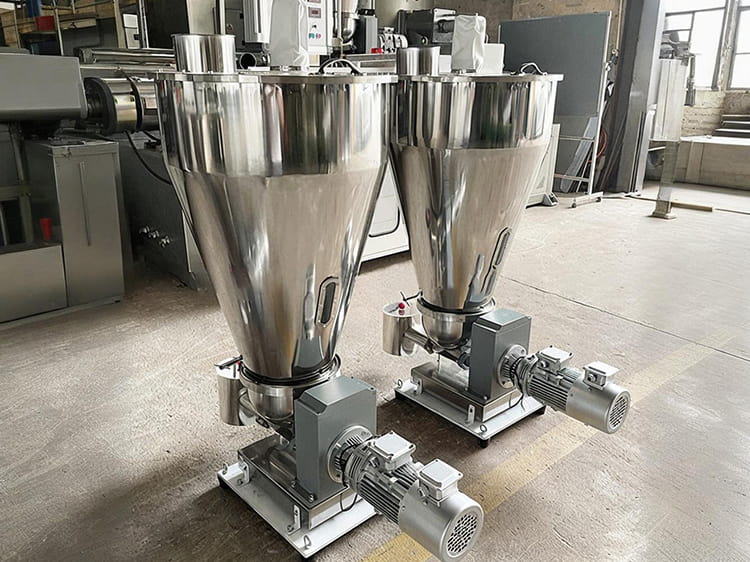
The Loss-In-Weight feeding machine uses a gravimetric system. There is a hopper on a scale. Twin screws move the material out. The machine checks how much weight the hopper loses to find the flow rate. If the flow changes, the controller quickly fixes it. This method is very exact. The measurement can be off by only ±0.1% or even less. This is much better than most volumetric feeders, which can be off by up to 5%. You can use this machine for powders, granulates, and liquids. It works well in places like medicine, food, and chemical factories.
Key Benefits
You get many good things when you pick a Loss-In-Weight feeding machine:
You waste less because you give the right amount of material.
You save money on materials over time.
You make your work faster for both batch and steady jobs.
You make your product quality more even, so fewer products get thrown away.
Tip: A Loss-In-Weight feeding machine helps you follow strict quality rules and spend less on running costs. You also do not need to make as many manual changes, so you get more work done.
Volumetric Feeder Overview
Definition and Operation
A volumetric feeder moves dry materials at a set speed. It works with powders or granules. The feeder uses a screw or auger to push material forward. You pick the speed, and the machine moves the material. How much material comes out depends on the screw’s speed and size. The feeder does not measure the material as it moves. It just keeps the flow steady. Some models have special designs for different materials.
Model | Features | Performance |
|---|---|---|
Model 105 Series | Dissimilar speed, double concentric auger metering mechanism | Highly accurate and dependable dry solids metering |
Volumetric Feeders | Unique ability to feed a wide variety of dry solid materials | Versatile metering performance with low maintenance requirements |
Note: Volumetric feeders are known for being reliable and accurate. You get new designs that work with many materials and need little care.
Mechanism and Limitations
You set the screw speed to run a volumetric feeder. The feeder thinks the material always stays the same. If the material changes, the feeder may not be as accurate. Things like moisture or temperature can change how much material moves. If the material gets wetter or lighter, you might see mistakes. The feeder does not fix these changes by itself. You need to check the material often to keep things working right.
Volumetric feeders do not measure the product as it moves.
The machine thinks density and product type stay the same.
Changes in moisture or temperature can make the feeder less accurate.
Typical Use Cases
Volumetric feeders are used in many places. They work with powders, granules, and some liquids. You see them in food, mining, building, medicine, and farming. They handle things like flour, sugar, salt, enzymes, and spices.
Industry | Typical Materials Processed |
|---|---|
Food Processing | Powders, granules, liquids |
Mining | Powders, granules |
Construction | Powders, granules |
Pharmaceuticals | Various food ingredients |
Agriculture | Various food ingredients |
Tip: Pick a volumetric feeder if you want a simple machine. It is easy to use and needs little care. These feeders are good for jobs where you do not need perfect accuracy.

Loss-In-Weight vs Volumetric: Main Differences
Accuracy and Consistency
Accuracy is very important when you pick a feeder. A Loss-In-Weight feeding machine is very precise. It uses a gravimetric system to check the weight all the time. The system sits on special load cells. It watches the hopper’s weight and changes the feed rate. This keeps dosing steady, even if the material changes.
Gravimetric feeders use a volumetric device and a mass-based control system.
You can set a feed rate, and the system will change for any material changes.
The control system checks weight loss and fixes problems fast.
When you refill, the Loss-In-Weight feeding machine works in volumetric mode. The screw speed stays the same. The feeder depends on the material’s bulk density. Try to keep the density steady for best results.
Volumetric feeders do not check the material as it moves. They use screw speed and think the material never changes. If the material changes, the feeder cannot fix it. This can cause dosing mistakes and less steady results.
Summary Table: Accuracy and Consistency
Feature | Loss-In-Weight Feeding Machine | Volumetric Feeder |
|---|---|---|
Dosing Accuracy | High (±0.1% to ±1%) | Moderate (up to ±5%) |
Consistency | Very consistent | Varies with material |
Adjustment | Automatic, real-time | Manual, less responsive |
Control and Automation
You want good control and automation for modern jobs. A Loss-In-Weight feeding machine gives you advanced control. It can change the feed rate based on what comes out. This means you get a steady flow, even with mixed materials. The system works well with automation and can connect to plant controls.
Volumetric feeders give basic control. You set the screw speed, and it runs at that speed. It does not change for different materials or jobs. This makes it better for simple tasks where you do not need tight control.
Feature | Loss-In-Weight Feeders | Volumetric Feeders |
|---|---|---|
Precision | High | Lower |
Feeding Rate Adjustment | Dynamic, based on discharge | Fixed |
Automation Integration | Easy, supports full automation | Limited |
Application Suitability | Complex, continuous processes | Simple, batch processes |
Loss-In-Weight feeders work with many materials and can change speed.
Volumetric feeders are best for easy-flowing materials and fixed rates.
Material Compatibility
You need to match the feeder to your material. A Loss-In-Weight feeding machine can handle many types, like powders, granules, and liquids. Special accessories help with flow problems like sticking. Software helps by fixing material changes. This keeps the flow steady and lowers wear.
Some feeders work well with tough materials. They stop friction and binding, so you get less downtime and less fixing.
Volumetric feeders work best with easy-flowing materials. They may have trouble with sticky, wet, or rough products. If the material changes, you might get blockages or dosing mistakes.
Key Points: Material Compatibility
Loss-In-Weight feeding machines handle many materials, even hard ones.
Volumetric feeders are good for simple, easy-flowing materials.
Cost Factors
Cost is important for every company. A Loss-In-Weight feeding machine costs more at first. But it has fewer moving parts, so you spend less on fixing and cleaning. Over 15 years, you save on repairs and cleaning. The total cost for fixing is lower than for screw feeders.
Volumetric feeders cost less to buy. But you may pay more for parts and cleaning later. Screw feeders need new parts often, which costs more. Cleaning takes longer and costs more.
The starting cost for Loss-In-Weight feeding machines is higher.
Fixing and cleaning costs are lower over time.
Volumetric feeders cost less to buy but more to fix.
Comparison Table: Cost Factors
Cost Aspect | Loss-In-Weight Feeding Machine | Volumetric Feeder |
|---|---|---|
Initial Investment | Higher | Lower |
Spare Parts | Fewer, lower cost | More, higher cost |
Maintenance | Less frequent, lower cost | More frequent, higher cost |
Cleaning | Faster, less expensive | Slower, more expensive |
Total Lifetime Cost | Lower | Higher |
Tip: If you want to save money and have less downtime, pick a Loss-In-Weight feeding machine. If you want a simple, cheap solution for easy materials, a volumetric feeder may be best.
At-a-Glance: Main Differences
Loss-In-Weight feeding machines give high accuracy, advanced control, and work with many materials. They cost more at first but less over time.
Volumetric feeders are easy to use and cost less at first, but are less accurate and cost more to fix later.
Application Scenarios
When to Use Loss-In-Weight Feeders
Pick a Loss-In-Weight feeder if you need very accurate control. These feeders are best for jobs where small changes can cause problems. They work well in factories that need exact dosing. Here are some times to use them:
If someone bumps the feeder, it finds and fixes the mistake fast.
If machines nearby shake the feeder a lot, you can find out why and fix it.
If problems happen at random times, you need to look for the cause and solve it.
When you refill the feeder, it waits to settle before measuring again.
If the feeder is not set up right, it can make mistakes all the time, so check how it is installed.
These feeders are great when you need exact dosing and automatic checks. They help you follow strict rules and waste less material.
When to Use Volumetric Feeders
Use volumetric feeders for easy jobs that do not need perfect accuracy. These feeders are good for materials that flow well and do not change much. They work best when you want a simple setup and little work to keep them running. Volumetric feeders are good for batch jobs or when the material stays the same.
Tip: Volumetric feeders are cheap and simple for basic jobs. You can use them if small mistakes do not hurt your product.
Industry Examples
Many industries use these feeders. In food factories, a bakery used twin screw feeders to add flour. This made their work faster by 10% and cut down on waste. In medicine, the Twin Screw Weight-Loss Weigh Feeder helped add the right amount of ingredients. This lowered the number of bad batches by 15-20%.
Food factories use loss in weight systems to control dry ingredients and check themselves.
Medicine companies use exact feeders to add the right amount and keep quality high.
You also see these feeders in chemical, mining, and farming jobs. Each industry gets better results by picking the right feeder for their needs.
Choosing the Right Feeder in 2025
Technology Trends
New technology is changing feeders in 2025. Smart factories use AI, IoT, and machine learning. These tools help feeders work better and save resources. Automated flex feeders move lots of material fast and accurately. You can set up systems for different parts. This helps make custom products. Machine vision and robots check how well feeders work. They help stop mistakes. Smart feeders also save money. They need less manual work and help control quality.
AI and IoT make feeders work better and more accurately.
Automated systems help you work faster and make fewer mistakes.
Sustainability programs help you waste less and use resources wisely.
Tip: To stay ahead, pick feeders with smart features and automation.
Integration and Automation
Feeders should work with automated production lines. Advanced sensors and IoT let you watch feeders all the time. You can change settings quickly to keep things running well. Loss-in-weight feeders are good for automated systems. They give exact doses and need little help from people. You see these feeders in food, medicine, and chemical factories where accuracy is important.
Evidence Type | Description |
|---|---|
Technological Advancements | IoT and AI let you watch and change feeders for better results. |
Demand for Automation | Automated feeders help you work fast with little human help. |
Sustainability Focus | Efficient feeders help you waste less and use energy better. |
You may have problems when you add new feeders. High starting costs can be hard for small companies. You need skilled workers to run advanced automation and IoT. Changing rules means you must update your systems often. Supply chain problems can slow down getting parts.
High starting costs
Need for skilled workers
Changing rules
Supply chain problems
Note: Plan for training and help when you switch to automated feeders.
Sustainability and Compliance
You must follow strict rules for the environment. Global rules like the Paris Agreement and ISO 14001 want you to lower emissions and do better for nature. Local rules, like the Clean Air Act in the USA or REACH in the EU, set standards for air and chemical safety. You need new technology and training to follow these rules. If you do not follow them, you can get fined and lose trust.
The Paris Agreement aims for less greenhouse gas.
ISO 14001 helps you improve the environment.
Local laws make you change how you work and manage risks.
Compliance Factor | Impact on Operations |
|---|---|
Compliance Costs | You need to buy new technology and train workers. |
Operational Adjustments | You may need to change how you run your plant. |
Risk Management | Not following rules can mean fines and lost trust. |
Alert: Always check rules before you buy new feeders.
Selection Tips
Pick a feeder that fits your job. First, check how much you need to feed and how fast. Make sure the feeder fits your space and works with your material. Look at silo size and how long the material stays inside. Check if your material is dry or sticky. See if it is rough and what size the particles are. Dust control matters if you use fine powders.
Find out how much you need to feed each hour.
Decide if the volumetric flow rate is enough.
Check the silo size and how long the material stays.
See if your material is sticky or rough.
Think about particle size and dust control.
Ask suppliers these questions before you buy:
Can the feeder handle your feed rates?
Will it fit in your space?
Does it work with all your materials?
Is volumetric or gravimetric feeding better for you?
Recommendation | Explanation |
|---|---|
Get parts from different places | This helps you avoid problems with tariffs and shipping. |
Use good data management | This makes sure the feeder data is reliable for improvement. |
Add sustainability goals | This helps feeders match your environmental plans. |
Invest in digital systems | This makes upgrades and connections easier. |
Work with partners | This helps you get new feeding solutions faster. |
Tip: Pick feeders that work with digital systems and help the environment. This helps you get ready for the future and follow new rules.
You have two types of feeders to pick from. The table below shows how they are different:
Feature | Loss-In-Weight Feeders (Gravimetric) | Volumetric Feeders |
|---|---|---|
Accuracy | High, adjusts in real-time | Lower, manual adjustments |
Material Handling | Closed-loop, detects weight loss | Mechanical measurement |
Cost | Generally higher | Generally lower |
Applications | Precise dosing required | Fixed-rate applications |
Operational Characteristics | Maintains consistency with changes | Requires frequent recalibration |
To choose the right feeder, do these things: First, figure out what your system needs. Think about the material and how exact you need to be. Next, look at how you will move the material and where it will go. Check where the feeder will sit and what the area is like. Try out different suppliers before you buy anything.
When you pick a feeder that fits your job, you work better and make better products. Ask experts for help if you are not sure. In 2025, most advanced jobs work best with a Loss-In-Weight feeding machine.
FAQ
What is the main difference between Loss-In-Weight and Volumetric feeders?
Loss-in-weight feeders are more accurate. They check weight loss as it happens. Volumetric feeders use screw speed. They do not change if the material changes.
Can you use Loss-In-Weight feeders for sticky materials?
Yes, you can use Loss-In-Weight feeders for sticky stuff. Special tools and software help with hard-to-move products. These keep the flow steady.
How often do you need to calibrate a Volumetric feeder?
You must check and adjust a Volumetric feeder often. If the material gets wetter or lighter, it can mess up the amount. Checking often helps keep it working right.
Are Loss-In-Weight feeders more expensive to maintain?
Loss-In-Weight feeders cost less to fix over time. They have fewer moving parts. Cleaning is faster, so you save money compared to Volumetric feeders.
Which feeder is better for automated production lines?
Loss-in-weight feeders are best for automated lines. They give exact amounts, connect easily, and work with advanced controls.